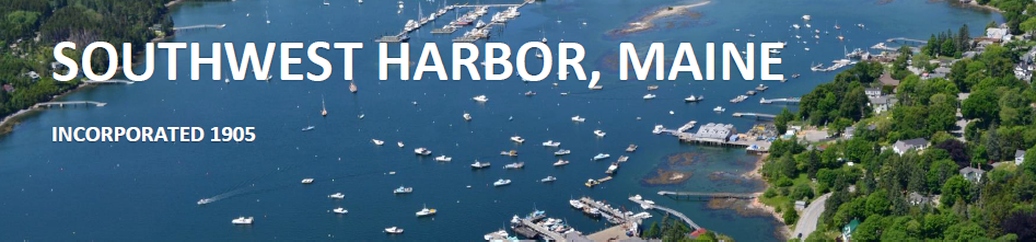
Town of Southwest Harbor, Maine
Our climate is changing. So is our coastline, our waterfront, and our daily life.
The Southwest Harbor Climate Vulnerability Assessment uses local data and scientific projections to show how climate hazards will affect our town in the years ahead.
Read the Full AssessmentDeveloped by the Gulf of Maine Research Institute with support from A Climate to Thrive, this assessment was funded by a Community Action Grant from Maine's Community Resilience Partnership. It is the foundation for a community resilience plan now being developed — and your input helps shape what comes next.
Key Findings
Here is what the assessment found
Rising Seas & Coastal Flooding
Flooding already reached Seawall Road and Manset during back-to-back storms in January 2024 — and the frequency will increase.
Extreme Heat Days
1.5 → 13 days/yearDays above 90°F could jump from fewer than 2 per year to nearly two weeks by mid-century.
Tick-Borne Disease
617 per 100,000Hancock County Lyme disease rates have soared from 13 per 100,000 in 2001 to over 600 today.
Gulf of Maine Warming
3.5x fasterGulf of Maine waters are warming 3.5 times faster than the global ocean, threatening lobster and the working waterfront.
Drinking Water & Saltwater Intrusion
Rising seas and drought can push saltwater into freshwater aquifers, threatening households reliant on private wells.
Wildfire Risk
Abundant forest fuels near Acadia National Park and densely clustered homes downtown create conditions for significant damage if a fire occurs.
Why This Matters
This report matters for every resident, business owner, and visitor
It is the foundation for the community resilience plan now being developed — and your perspective helps shape what comes next.
-
Year-round residents — Understand risks to your property, roads, and services. Advocate for the infrastructure upgrades that matter most.
-
Seasonal homeowners — Learn how coastal flooding and extreme weather could affect your property and the community you return to each year.
-
Business owners & fishermen — See how ocean warming, species shifts, and infrastructure risks could reshape the local economy and working waterfront.
-
Visitors & tourists — Get essential context on emergency preparedness, evacuation routes, and the environmental conditions that make Southwest Harbor the place you love.
Town of Southwest Harbor · Public Health
Protect Yourself and Your Family from Lyme and Other Tick-Borne Diseases
Black-legged (deer) ticks are common in coastal Maine, including Mount Desert Island. These tiny ticks can carry Lyme disease, anaplasmosis, and babesiosis. Cases are increasing statewide, and prevention is your best protection.
After Every Outing
Check yourself, your kids, and your pets every day
Even your own yard can harbor ticks. A daily tick check is the single most important step you can take.
Check yourself, kids, and pets every day after being outdoors — even in your own yard
Focus on warm, hidden spots: behind knees, armpits, groin, hairline, belly button
Use a mirror or ask someone to check your back
Check gear and clothing before coming inside; tumble-dry on high heat for 10 minutes to kill ticks
Before You Go Out
Dress for defense
Light-colored clothing
Makes ticks easier to spot before they reach skin
Tuck pants into socks
And shirt into pants when hiking or working in brush
Permethrin on clothing
Treat clothing and boots — lasts through multiple washes
EPA-registered repellent
Use DEET, picaridin, or oil of lemon eucalyptus on exposed skin
If You Find a Tick
Remove it safely — step by step
- 1
Use fine-tipped tweezers
Grasp the tick as close to your skin as possible
- 2
Pull straight up with steady pressure
Don't twist or jerk — this can cause the mouthparts to break off in the skin
- 3
Clean the bite area
Wash with soap and water or rubbing alcohol
- 4
Save the tick
Place it in a sealed bag or container with the date and location where you were bitten
- 5
Watch for symptoms
Call your doctor if you develop a rash, fever, or flu-like illness
UMaine Tick Lab offers FREE tick identification. Send your tick for testing to find out if it may carry disease. Learn more at extension.umaine.edu/ticks
Town of Southwest Harbor · Environmental Workgroup
Solid Waste & Recycling Decision Guide
Not sure where something goes? This guide covers the most common items — from curbside recyclables to bulky furniture to hazardous waste — and tells you exactly where to take them.
Quick Reference
What to do with common items
| Item | Where to take it | Notes |
|---|---|---|
|
Regular bagged trash
|
EMR Transfer Station, Long Pond Rd, SWH | Fee-based; open Mon–Sat. [1] [2] |
|
Mixed recyclables
|
EMR Transfer Station, Long Pond Rd, SWH | Single-sort recycling; follow posted rules. [2] [3] |
|
Large/bulky items
|
EMR Transfer Station, Long Pond Rd, SWH | Furniture, carpet, etc. Not accepted in Bar Harbor; must go to EMR. Fees apply. [4] [5] |
|
Batteries, waste oil, electronics
|
EMR Universal Waste Day or HHW/UW event | 2nd Saturday each month at EMR, plus annual HHW collection day. [6] [7] |
|
Oil-based paint, solvents
|
Regional HHW/UW event (MDI) | Accepted on HHW day; latex paint is often handled differently. [6] [7] |
| Donation & Reuse Options | ||
|
Gently used clothing (MDI)
|
Serendipity, 36 Kennebec Pl, Bar Harbor | Donated clothing and shoes; supports Bar Harbor Food Pantry. [8] [9] |
|
Clothing + shoes (Ellsworth)
|
Goodwill Ellsworth, Downeast Hwy | Gently used, clean, sellable only. [10] [11] [12] |
|
Nice clothing for local causes
|
2nd to None; Turn-Style; Emmaus (Ellsworth) | Focus on good-condition items; supports local programs. [13] [14] [15] |
|
Small household items
|
Serendipity; Goodwill; 2nd to None | Must be clean and usable; no broken or soiled items. [8] [13] [11] |
Before You Go
Tips for a smooth drop-off
Check hours first
EMR Transfer Station is open Monday through Saturday. Hours vary by season.
Sort before you arrive
Separate recyclables from trash at home. Single-sort recycling means one bin, but follow the posted rules.
Donate with care
Thrift shops accept clean, usable items only. Broken or soiled items create disposal costs for nonprofits.
Never dump hazardous waste
Batteries, paint, solvents, and electronics require special handling. Wait for a HHW/UW event or 2nd Saturday at EMR.
Sources
Where this information comes from
- Acadia Disposal — EMR Transfer Station
- GIFT MDI — Guide to Local Transfer Stations
- Town of Trenton — Recycling & Waste Management
- Bar Harbor — Solid Waste & Recycling
- MDI Solid Waste StoryMap
- Acadia Disposal — HHW & Universal Waste
- SWH — HHW/UW Event Flyer (PDF)
- Bar Harbor Food Pantry — Serendipity
- United Way — Serendipity Listing
- Goodwill NNE — Donate
- Goodwill — Donor Guidelines
- Goodwill — Donation Etiquette
- 2nd to None Thrift & Gift
- Emmaus Homeless Shelter — Donations
- Maine Needs — Hancock County Resources
Town of Southwest Harbor · Transfer Station
EMR Transfer Station
Hours, location, fees, and the Universal Waste Day calendar for the Eastern Maine Recycling Transfer Station on Long Pond Road.
Hours
| Monday – Friday | 8:00 AM – 5:00 PM |
| Saturday | 8:00 AM – 3:00 PM |
| Sunday | Closed |
| Legal Holidays | Closed |
Location & Contact
EMR Office: 28 Main Street, SWH
Office hours: Mon–Fri 9 AM – 3 PM
Office phone: (207) 244-9033
Fees
Trash disposal is fee-based. Fees are assessed by load at the gate.
Recycling is accepted at no additional charge when materials follow posted sorting rules.
Bulky items (furniture, carpet, mattresses, etc.) incur additional fees.
Contact EMR at (207) 244-4347 for current fee details. The town pays approximately $175/ton in tipping and facility fees.
Monthly Collection
Universal Waste Day Calendar — 2026
Universal Waste is accepted at the EMR Transfer Station on the 2nd Saturday of each month, 9:00 AM – 1:00 PM. Bring batteries, fluorescent bulbs, electronics, waste oil, and other hazardous household items.
Accepted on Universal Waste Day
- Batteries (all types)
- Fluorescent bulbs & tubes
- Electronics (TVs, computers, etc.)
- Waste oil & antifreeze
- Mercury thermostats & thermometers
- Aerosol cans
HHW — Annual Collection Only
- Oil-based paint & stains
- Solvents & thinners
- Pesticides & herbicides
- Pool chemicals
- Gasoline & kerosene
- Propane tanks
The annual HHW/UW event is typically held in September at MDI High School. Check Acadia Disposal District for the next date.
Recycling at EMR
Single-sort recycling rules
Accepted (loose, not bagged)
- Paper & cardboard (flattened)
- Plastic bottles & jugs (rinsed)
- Aluminum & tin cans (rinsed)
- Newspaper & magazines
- Mixed paper & mail
Not accepted in recycling
- Glass bottles & jars
- Plastic bags & wrap
- Styrofoam
- Food-soiled containers
- Bagged recyclables (must be loose)
Contamination costs everyone. Loads with unacceptable or soiled materials may be rejected and charged the $110/ton tipping fee as trash. When in doubt, throw it out.
Town of Southwest Harbor · Environmental Workgroup
Housing Working Group
Collecting data and exploring options to increase the supply of year-round workforce and affordable housing in Southwest Harbor.
Our Work
What the Housing Working Group is doing
At the introductory Housing Working Group meeting, we identified three main goals:
- Revisit the housing recommendations from the 2010 and 2022 Comprehensive Plans
- Collect data and inventory the current SWH housing supply
- Gather information from other towns on what has worked
The top priority from the 2022 Comp Plan revision and the direction from the Select Board was to collect information to support future policy discussions and action. Once we know what we have, we can explore widely for possible action to increase the supply of year-round workforce and affordable housing.
Key Definitions
Two types of housing need
Workforce (Middle Income) Housing
Rental or homeownership opportunities for middle-income households where the rental fee or mortgage cost is not more than 30% of gross monthly household income.
Because the cost of housing on the coast is significantly higher than inland, Workforce Housing here refers to households earning 100–150% of the state household median income.
Affordable Housing
As defined by the Maine State Housing Authority: rentals limited to households earning 80% or less of state median income, and home ownership to those earning 120% or less of state median household income.
Both definitions refer to year-round housing unless specifically designated for seasonal workers. This figure has increased significantly since 2020.
Data Collection
Housing inventory in progress
Year-Round Housing
Zone A near completeWe are documenting year-round housing and determining whether each unit is owner-occupied or rented. Criteria include:
- Owner address in SWH
- Homestead exemption on record
- Voter registration at that address
- Field observation (plowed driveways, shoveled paths in winter)
- Conversations with local rental agents
If a registered voter at an address is not the owner, the property is noted as rented. Zone B is larger, more challenging, and in progress.
Seasonal Housing
Just startingSeasonal housing is complex and includes three distinct categories that should probably be treated differently in any future regulation:
Airbnb and VRBO listings. Hard to quantify: listings may include hotel rooms, purpose-built tourist accommodations, and places listed as “near” SWH. They never include street addresses.
Hotels, inns, cabins, campgrounds, and other purpose-built rooms for summer visitors. These have existed since the Rusticators first came to SWH.
Property owners who pay taxes, use their property mainly for family and friends, and may rent by the week or month when not here. Any future short-term rental regulation would likely not apply to these traditional summer residents, who have been part of this community since the mid-19th century.
Employee Housing
Inventory beginningBoth seasonal and year-round employee housing is another facet of housing availability. We have the beginnings of a list that should grow as we continue the inventory work.
Covenant & Public Housing
DocumentedSWH currently has 4 houses under affordability covenants that restrict purchase cost and/or resale value and include income qualifications for homeowners.
Separately, SWH has 71 public housing apartments with income limits for occupants. These are distinct from covenant-restricted housing.
Statewide Resource · Maine
Municipal Wastehub
Ensuring affordable and environmentally sound disposal of Maine's municipal solid waste through smarter logistics, sustainable waste management, and policy leadership.
Visit municipalwastehub.orgMission
A statewide partner for affordable, sustainable waste disposal
Municipal Wastehub works with Maine towns to keep waste transportation costs low, reduce carbon footprint, and advance smarter, greener waste practices through policy leadership and community education.
Streamlined Logistics
Efficient, reliable hauling that keeps municipal waste transportation costs low and reduces the carbon footprint of getting waste where it needs to go.
Comprehensive Management
End-to-end solutions from collection to recycling to disposal — sustainable and cost-effective for communities large and small. Reduce, reuse, recycle.
Policy & Education
Empowering Maine municipalities through policy leadership and community education to advance smarter, greener waste practices over the long term.
Why This Matters for Southwest Harbor
A regional resource for our local work
As the Environmental Workgroup continues to study solid waste management options for Southwest Harbor, Municipal Wastehub serves as a valuable statewide reference. The organization's focus on affordability, environmental responsibility, and inter-municipal cooperation directly aligns with concerns voiced by SWH residents about waste transportation costs, the legacy of historic landfill use, and the long-term sustainability of disposal practices on Mount Desert Island.
Their work on streamlining hauling logistics and supporting smaller communities is particularly relevant for towns like ours that depend on regional transfer stations and outside processing facilities.